


Historic Buildings: Many Victorian and Edwardian homes in areas like Jesmond, Fenham, and Heaton contain asbestos in loft insulation, garage roofing, and textured ceiling coatings.
Industrial Sites: The remnants of Newcastle’s shipbuilding and heavy industries along the Tyne often contain asbestos in pipework, roof panels, and wall insulation.
Public and Commercial Buildings: Schools, libraries, and offices built in the mid-20th century in areas such as Gosforth and Benwell used asbestos for fireproofing and soundproofing.
Urban Regeneration: Projects like the redevelopment of Byker Wall, the Quayside regeneration, and the transformation of former industrial sites along the Tyne often require careful removal of asbestos to ensure safety.
Historic Conservation: Listed buildings, including Newcastle’s famous Georgian and Victorian architecture, demand sensitive asbestos management during renovation to protect both their heritage and public health.
Residential Revitalisation: The popularity of restoring Newcastle’s historic homes increases the risk of disturbing asbestos in walls, ceilings, and flooring.
Newcastle’s history, from its medieval roots to its industrial revolution boom and post-war expansion, is evident in its architecture. The city boasts a blend of historic landmarks, industrial relics, and modern developments that tell the story of its growth. However, hidden within many of Newcastle’s buildings is a silent danger: asbestos. Once a staple in construction, asbestos now poses serious health risks, making its safe management a vital part of preserving the city’s heritage.
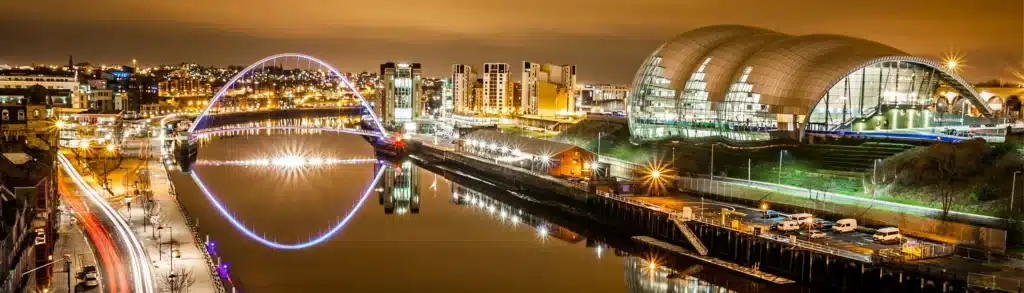
The Industrial Revolution and Shipbuilding Boom: As a key player in Britain’s industrial revolution, Newcastle’s shipyards, factories, and workshops along the Tyne became a hub of innovation. Asbestos was widely used for its fireproofing and insulating properties in boilers, engines, and structural materials to support heavy industries.
Victorian and Edwardian Growth: During the city’s rapid expansion in the 19th and early 20th centuries, residential areas like Jesmond and Heaton were built. Later renovations often introduced asbestos into homes in the form of insulation, fireproofing, and roofing materials.
Post-War Reconstruction: World War II left its mark on Newcastle, with bomb damage and housing shortages leading to the rapid construction of estates in Walker, Byker, and Kenton. Asbestos became a common feature in these new homes and public buildings, used in roofing, pipe lagging, and ceiling tiles.
Modern Development in the Mid-20th Century: As Newcastle transitioned into a regional hub for commerce and education, asbestos was integrated into office buildings, schools, and public spaces. Landmarks like the Civic Centre and mid-century office blocks in the city centre reflect this era of construction.
Asbestos is an unwanted part of Newcastle’s industrial and architectural legacy. While undisturbed materials can remain safe, damaged or deteriorating asbestos releases fibres that pose serious health risks. Managing asbestos is essential not only for protecting residents but also for preserving the historic and modern fabric of Newcastle.
If you suspect asbestos in your property, contact Safe:Environment. Our expert team is here to help you navigate Newcastle’s asbestos challenges, ensuring a safer future for the city and its people.
Want to find out how much it’ll cost you for Asbestos Removal or a survey? Click one of the buttons below, add your requirements and details to receive your instant on-screen estimate!





 Leeds
Leeds Hull
Hull Newcastle
 York
York Liverpool
 Manchester
 London
 Edinburgh
 Glasgow
 Birmingham
 Bristol
 Southampton