








Asbestos Removal Southampton
 Leeds
Leeds Hull
Hull Newcastle
 York
York Liverpool
 Manchester
 London
 Edinburgh
 Glasgow
 Birmingham
 Bristol
 Southampton
Southampton’s status as a thriving port city led to the construction of warehouses, offices, and public buildings in the mid-20th century. Many of these buildings, such as industrial units in Northam and public spaces like schools and libraries, still contain asbestos in flooring, ceiling tiles, and insulation.
Additionally, as the port of Southampton expanded, older structures used for maritime purposes, including dock buildings and storage units, incorporated asbestos to improve fire safety. These structures, especially those repurposed for modern use, can still pose risks today.
Southampton’s reconstruction after World War II meant rapid construction using readily available materials, including asbestos. This legacy, combined with the city’s high concentration of older housing and public buildings, means asbestos-containing materials (ACMs) are widespread. While ACMs are safe when undisturbed, damaged or deteriorating materials release hazardous fibers into the air, posing risks to residents, workers, and visitors.
By addressing asbestos risks in your property, you can help protect your family, tenants, or employees. If you’re unsure about asbestos in your property, seek expert advice and support to ensure safety and compliance.
Southampton
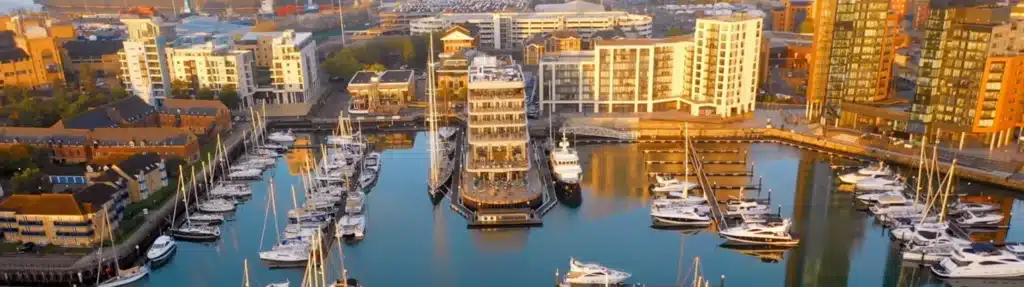
Southampton’s rich maritime heritage and historic development have left the city with a diverse mix of buildings, from charming Victorian terraces in St. Mary’s to 20th-century council estates in Weston and modern offices in the city centre. Known as the “Gateway to the World”, Southampton’s history as a key port city and its rebuilding efforts after the Second World War played a significant role in shaping its architecture.
However, many of these properties, particularly those built or renovated between the 1930s and 1980s, may contain asbestos. This once widely-used material, prized for its fireproof and insulating qualities, now poses serious health risks. Understanding asbestos risks in Southampton’s homes and commercial buildings is crucial for protecting the health and safety of residents, workers, and visitors.
Southampton experienced a building boom during the mid-20th century, especially in the post-war years when rebuilding the city was a priority. Many homes and buildings from this era—found in areas like Bitterne, Shirley, and Freemantle—were constructed using asbestos. Common locations include:
Loft and Wall Insulation: Found in houses built during the 1940s and 50s, especially in suburban neighborhoods like Swaythling and Millbrook.
Textured Ceilings: Artex ceilings, popular in homes from the mid-century, often contain asbestos and are seen in properties across Thornhill and Woolston.
Pipe Lagging and Boiler Insulation: Common in council-built housing estates such as those in Harefield and Townhill Park.
Roofing Felt and Garage Roofs: Frequently used in properties with flat roofs or detached garages in areas like Portswood and Bassett.
Want to Learn More?
Click the links below to understand more about managing asbestos risks in Southampton properties:
Asbestos Removal
Get An Instant On Screen Quote
Want to find out how much it’ll cost you for Asbestos Removal or a survey? Click one of the buttons below, add your requirements and details to receive your instant on-screen estimate!