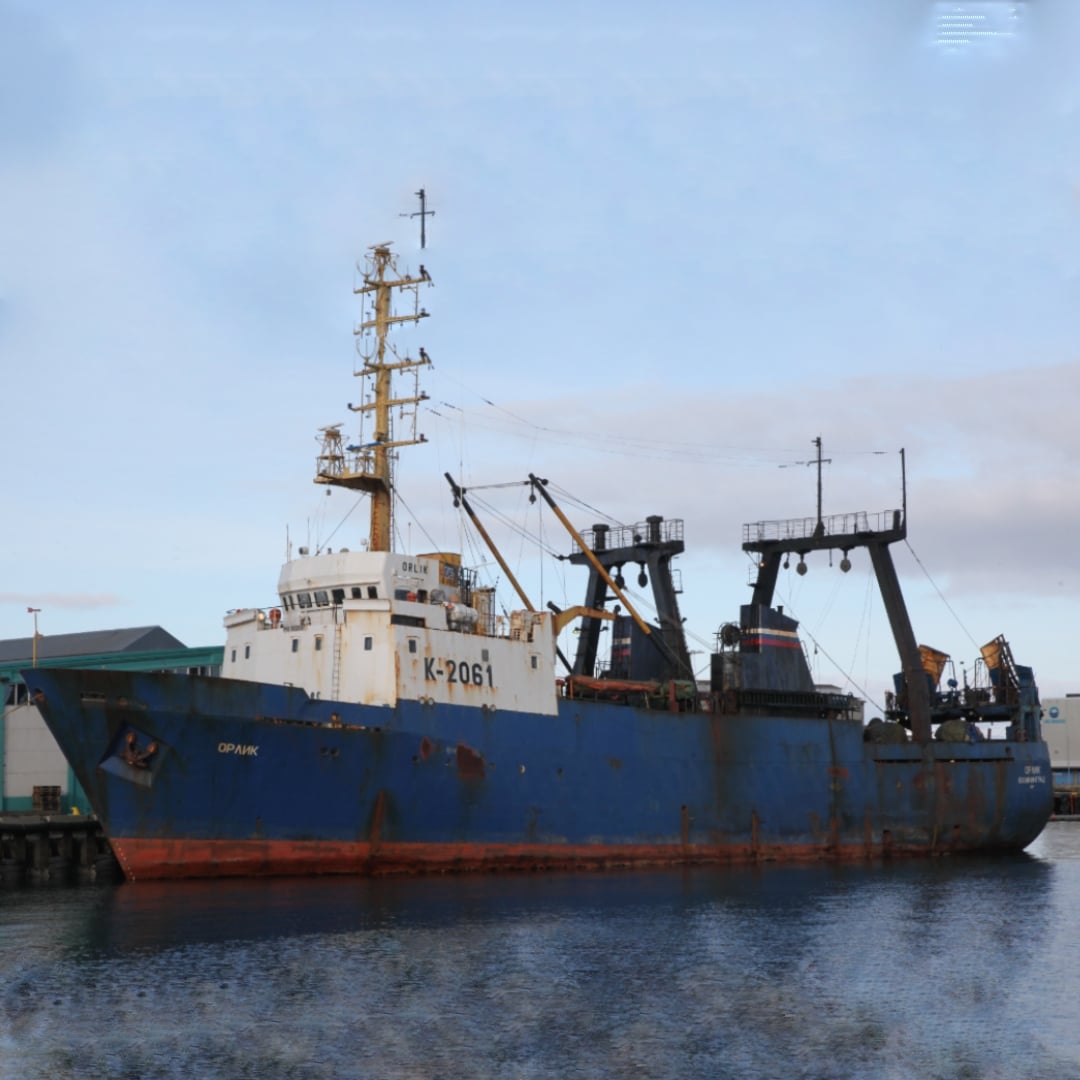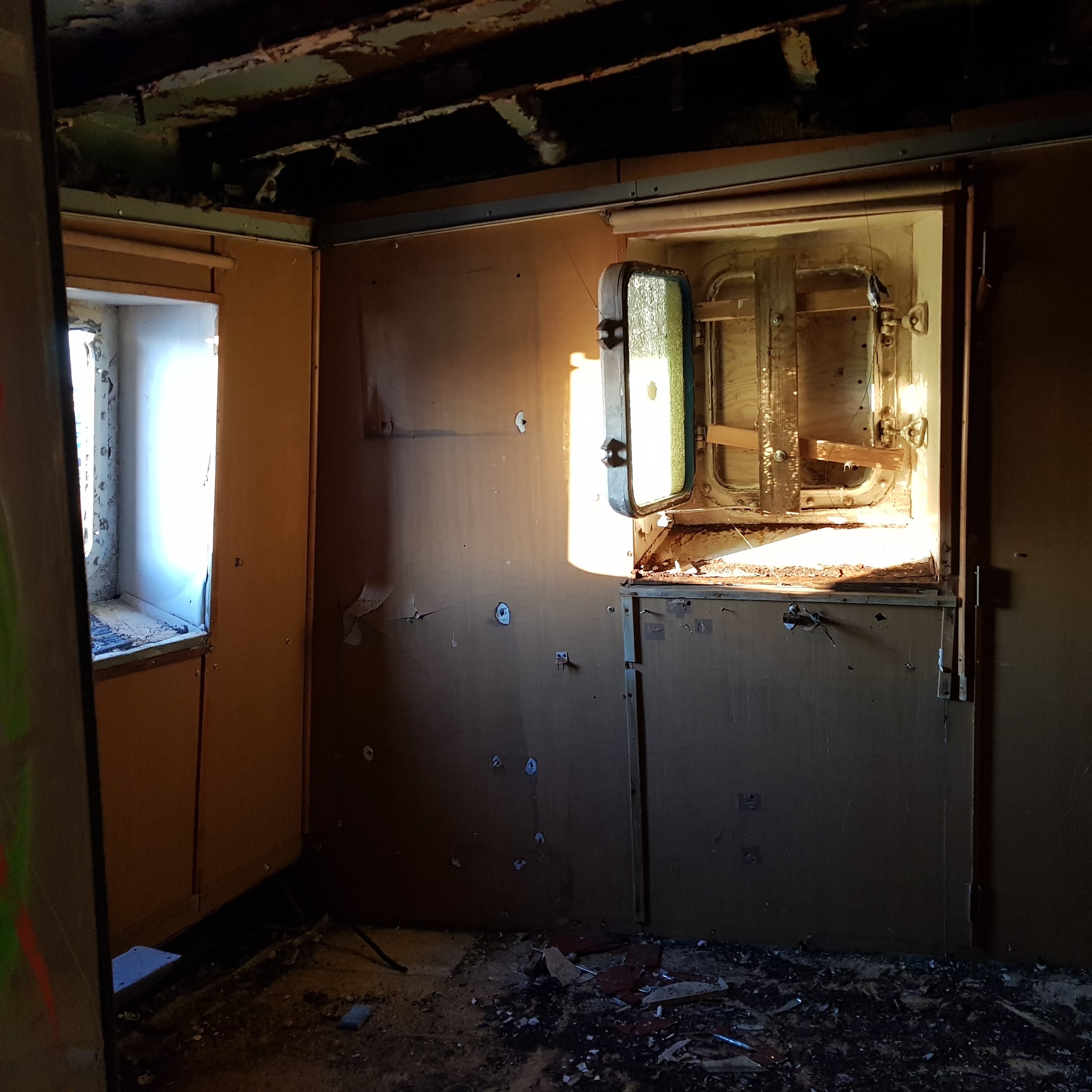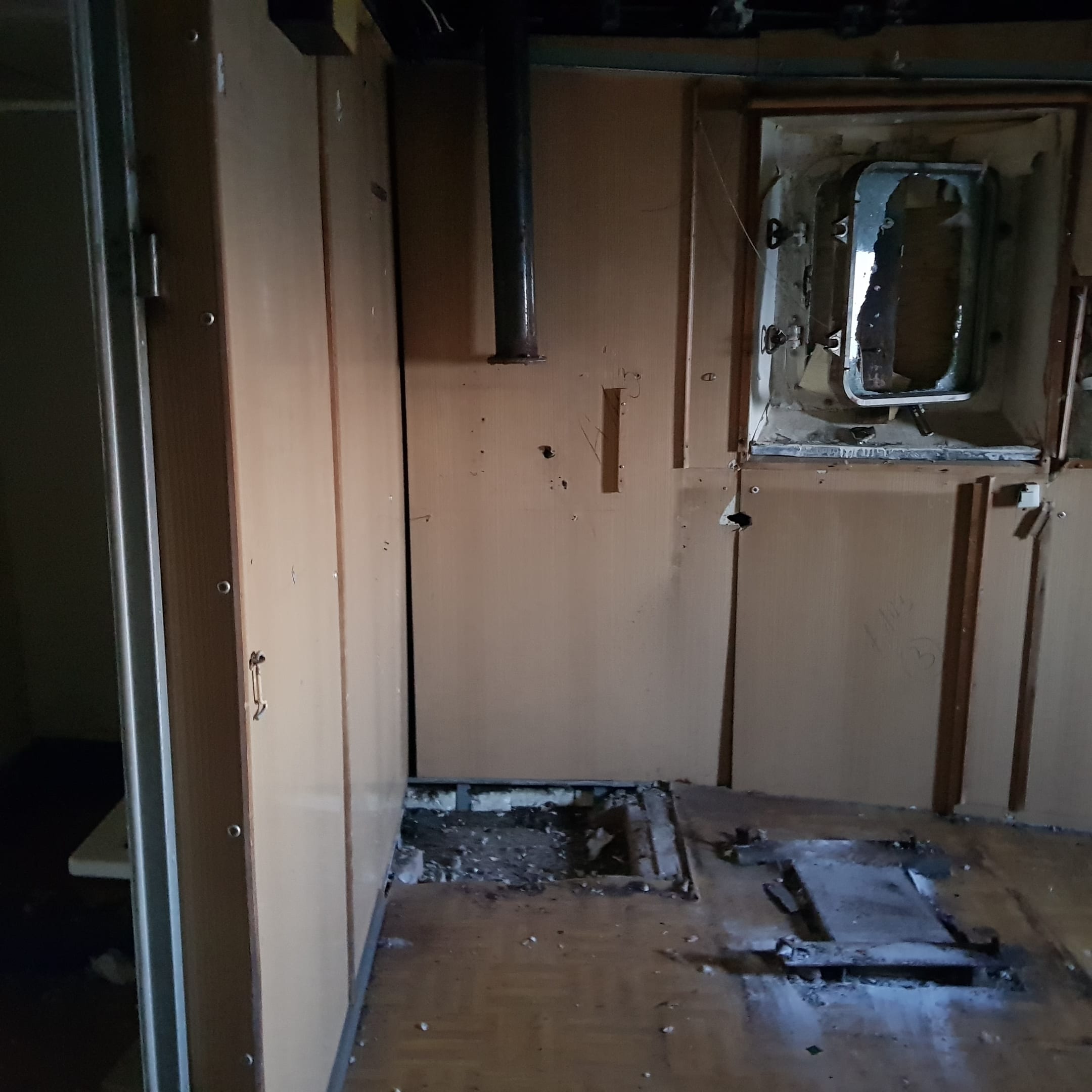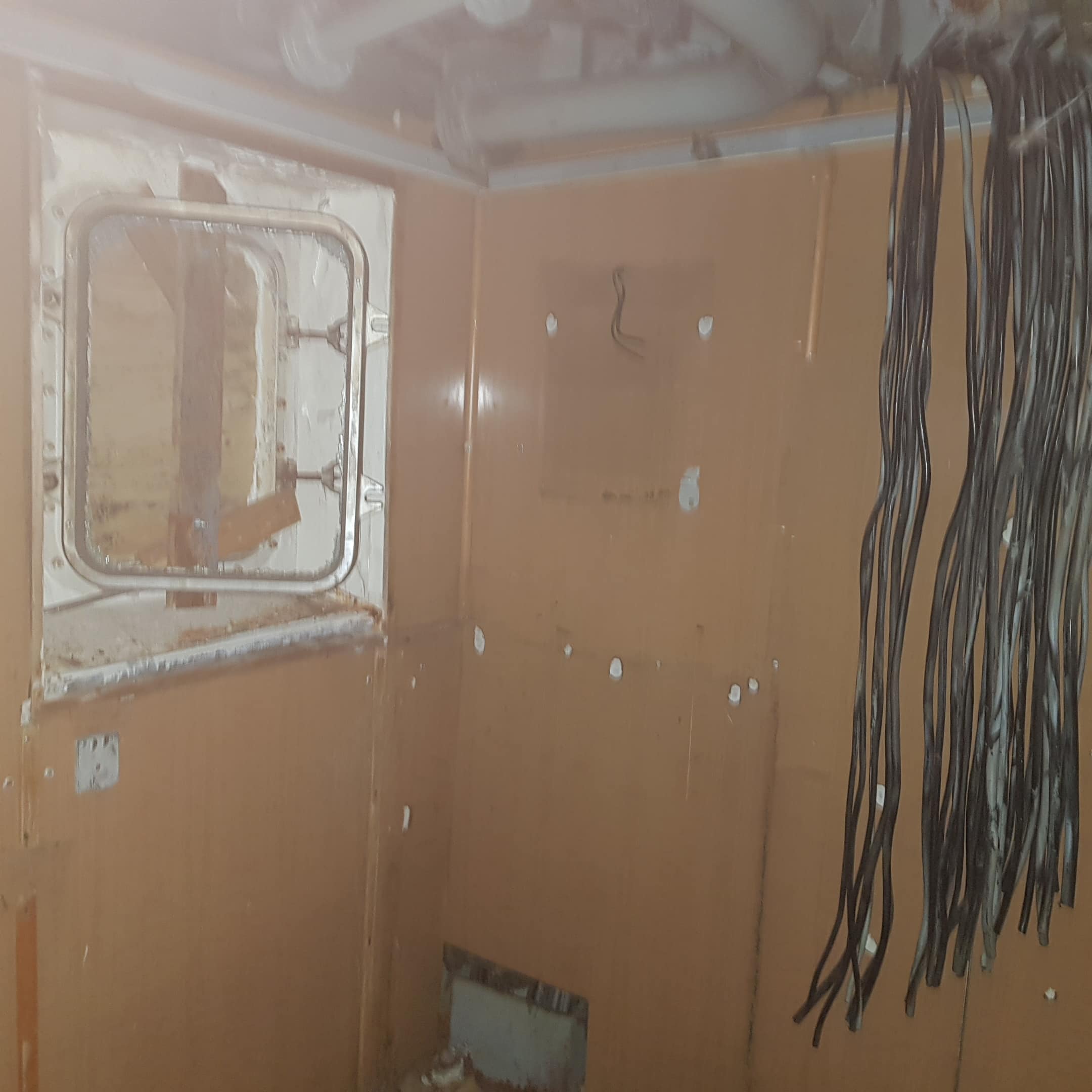




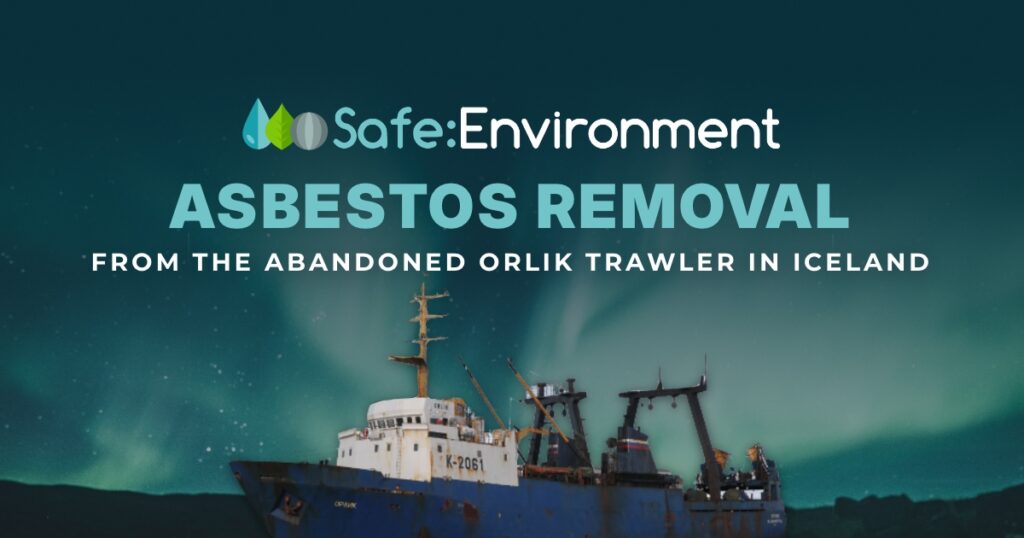
In December 2019, Safe:Environment was presented with a challenging asbestos removal from the Orlik, a deteriorating trawler moored in the harbour of Njarðvík, Iceland. Abandoned and at risk of sinking, this once-mighty fishing vessel had become a significant environmental hazard. This project would test the limits of our team’s expertise, resilience, and ability to adapt to extreme conditions.
A Storied Vessel in Decline
The Orlik, a Kaliningrad-registered trawler, was part of the Atlantik 333 series—a fleet of over 80 vessels built in the 1980s in East Germany for the Eastern Bloc’s fishing industry. At 62.26 metres long and 13.82 metres wide, the trawler was equipped to freeze fish, produce fishmeal and oil, and can products directly on board.
By the time the Orlik arrived in Iceland in 2011, it was already nearing the end of its operational life. Initially managed by an Icelandic company, the vessel was abandoned in the port of Hafnarfjörður. Ownership passed to waste management company Hringrás, which intended to scrap the vessel in nearby Helguvík. However, changing regulations and logistical challenges stalled these plans, leaving the Orlik to languish in Njarðvík’s harbour. Over the years, the vessel’s condition worsened, narrowly avoiding sinking on multiple occasions, and drawing increasing concern from local authorities.
A Call for Expertise
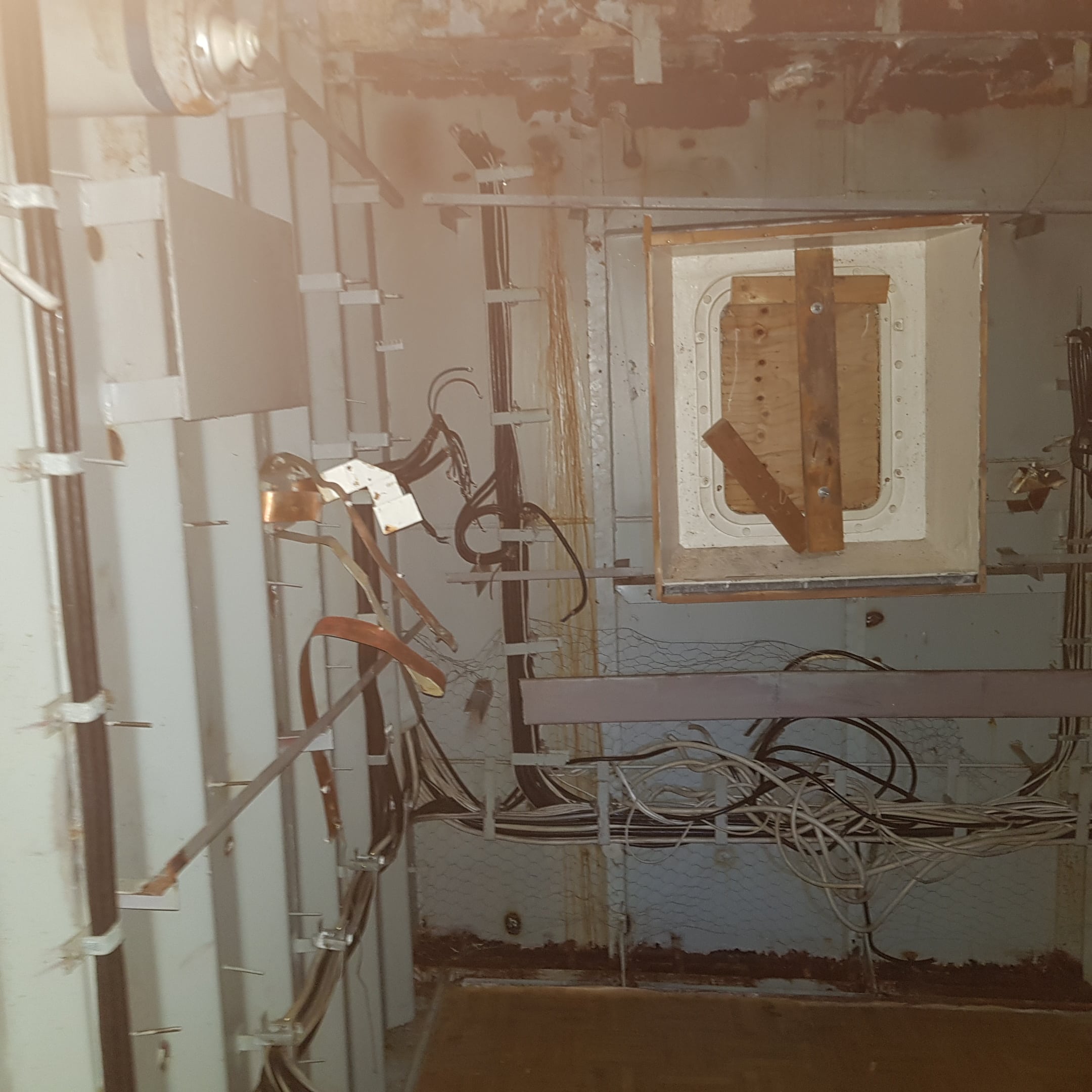
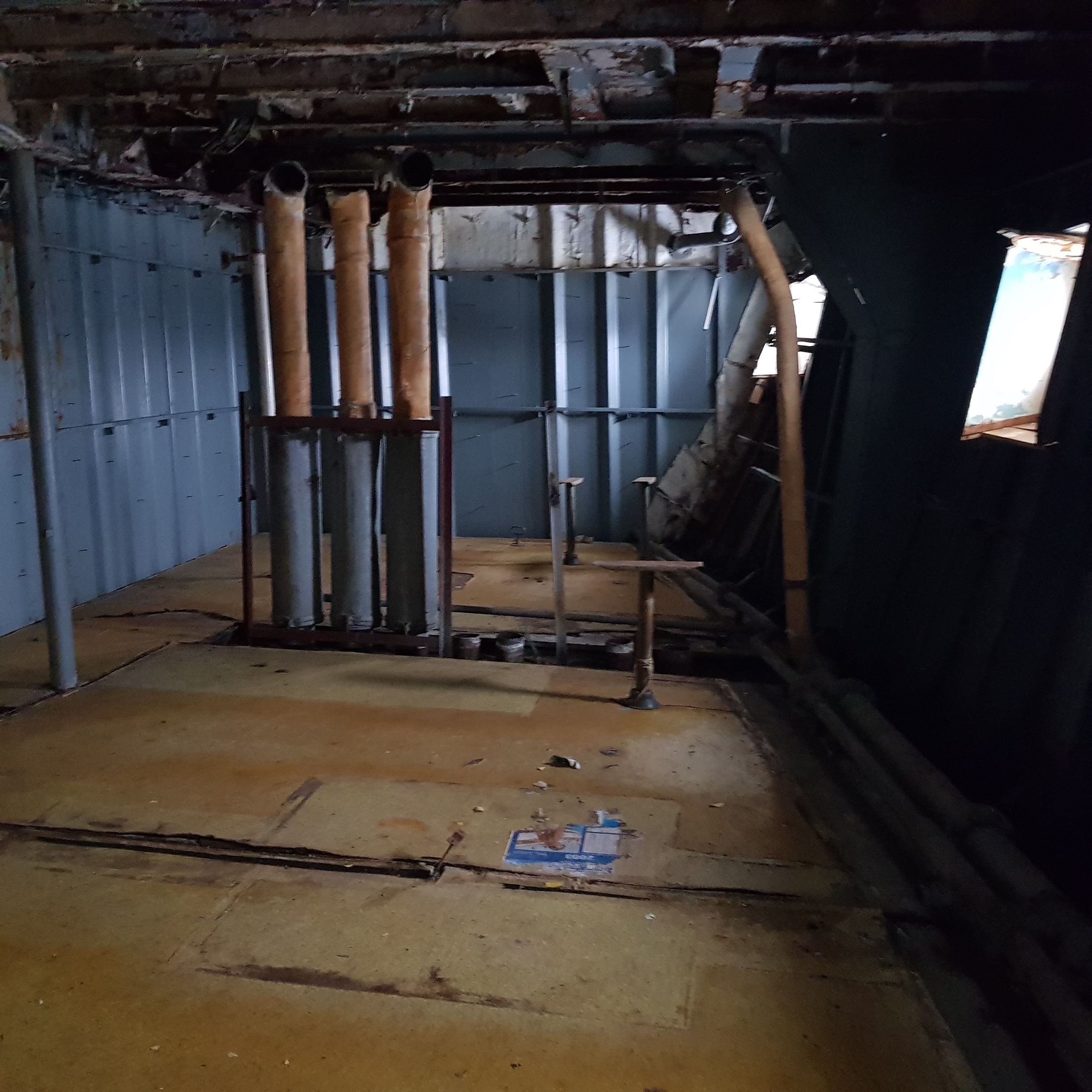
Recognising the urgency of addressing the Orlik’s deteriorating state, Hringrás contacted Safe:Environment in December 2019 to remove the asbestos-containing materials—a critical first step in preparing the vessel for dismantling. The scope of the work was extensive, involving the removal of marine board partition walls and textile wraps from pipework.
Following an initial site visit to assess the project, we provided a detailed proposal with a £180,000 quote. In January 2020, Safe:Environment was awarded the contract and obtained the necessary Icelandic Asbestos Removal License to proceed with the work.
Unprecedented Challenges
The Orlik project posed a series of challenges that tested our team’s adaptability and problem-solving skills:
Extreme Weather: Working in Iceland’s unforgiving winter climate, our team braved temperatures as low as -15°C and faced up to six feet of snow, which brought operations to a standstill on several occasions.
Volcanic Activity: Adding to the drama, a volcano warning was issued in Grindavík, where our team was staying. As fissures opened and began to erupt, the ever-present threat of natural disaster added a new layer of complexity to the project.
Aging Infrastructure: The Orlik was in a state of severe decay, requiring our team to work with extra care to ensure safety while navigating the rusting and unstable environment.
Precision in Execution
Despite these hurdles, Safe:Environment’s team worked with meticulous precision to safely remove the asbestos. Our approach involved:
Using state-of-the-art equipment and techniques to safely contain and extract hazardous materials.
Adhering to Icelandic safety and environmental regulations, ensuring full compliance at every stage of the project.
Coordinating closely with local authorities and harbour officials to manage logistics and maintain safety in challenging conditions.
The removal of asbestos was a critical milestone in preparing the Orlik for scrapping. Once the hazardous materials were extracted, the vessel’s superstructure could be dismantled, and its hull reduced in weight. The remaining steelwork was transported to the nearby Skipasmíðastöð Njarðvíkur shipyard for final processing.
A Landmark Achievement
By March 2020, the Orlik project was successfully completed, marking a significant step in addressing a longstanding environmental hazard. This achievement underscored Safe:Environment’s ability to tackle complex and high-risk projects, even in the most challenging conditions.
Reflections on the Experience
Working on the Orlik in Iceland was a project unlike any other. The extreme conditions—both environmental and logistical—highlighted the importance of adaptability, meticulous planning, and teamwork. Our time in Iceland was not only a demonstration of professional expertise but also an opportunity to engage with the country’s unique landscapes and culture, even as we faced the challenges of Arctic weather and the looming threat of volcanic activity.
Conclusion
The Orlik project showcased Safe:Environment’s commitment to delivering exceptional results under extraordinary circumstances. Whether it’s a derelict trawler in the Arctic Circle or a local asbestos removal project closer to home, we approach every challenge with the same dedication to safety, precision, and excellence.