



In recent years, property owners across the UK have noticed a growing trend: more and more insurance providers are asking specific questions about asbestos — and in particular, asbestos ceilings — during the underwriting process.
Whether you’re applying for a new buildings insurance policy or renewing an existing one, questions like “Does the property contain any asbestos?” or “Are there any textured ceilings installed before 1990?” are becoming common. But why the sudden concern?
The Hidden Risk in the Roof
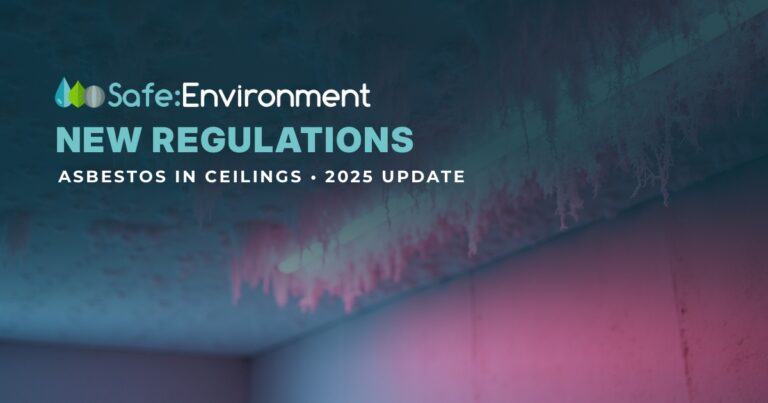
Asbestos was widely used in UK construction until it was banned in 1999, especially in sprayed coatings, insulation, and textured ceiling finishes (such as Artex). These materials are generally safe if undisturbed, but when damaged or removed incorrectly, they can release fine fibres that cause life-threatening illnesses like mesothelioma, asbestosis, and lung cancer.
Insurance providers are increasingly aware that even minor incidents involving asbestos can lead to costly claims, including:
- Emergency clean-up and decontamination
- Tenant relocation
- Health liability claims
- Property devaluation or resale complications
Financial Exposure for Insurers
Asbestos-related liabilities are not just a health risk — they’re a financial one. Insurance companies have already faced rising costs due to historic claims and litigation. Now, they’re moving proactively to limit future exposure. This means tighter scrutiny of properties with potential asbestos content, which includes older homes, flats, and commercial buildings.
According to industry sources, some insurers may:
- Exclude asbestos-related damage or exposure from standard policies
- Charge higher premiums for properties with confirmed asbestos
- Decline coverage if the material is deteriorating or improperly managed
- Require a professional asbestos survey before finalising the policy
What They’re Looking For
When insurers ask about asbestos, they’re usually focused on:
- The type of asbestos present (e.g., friable vs. bonded)
- Its location (ceilings are a red flag due to potential airborne spread)
- The condition of the material
- Whether it has been assessed or encapsulated by a licensed professional
Textured coatings like Artex can contain chrysotile (white asbestos), and while often considered “low risk” if intact, they still pose challenges in emergency or repair scenarios.
Impact on Homeowners and Landlords
If you’re a homeowner, landlord, or managing agent, this trend has real implications. You may be:
- Asked to provide a recent asbestos survey during insurance renewal
- Required to disclose asbestos ceilings to tenants under new rental legislation
- Denied cover for water or fire damage if asbestos complicates the restoration
- Facing higher insurance excesses or premiums
For landlords in particular, not addressing known asbestos risks could also lead to breaches of the Homes (Fitness for Human Habitation) Act 2018 or the Control of Asbestos Regulations 2012, both of which require properties to be safe and free from avoidable hazards.
What You Can Do
To avoid insurance issues — or worse, claim denials — property owners should take proactive steps:
Commission an Asbestos Survey
A professional management or refurbishment survey will confirm the presence and condition of asbestos-containing materials (ACMs), including ceilings.
Consider Encapsulation or Removal
If the ceiling is in poor condition or due for renovation, have it removed or professionally sealed by a licensed contractor.
Keep Records on File
Insurance companies may ask for documented evidence. Keep your asbestos report, removal certificates, and any correspondence ready.
Work with an Asbestos-Aware Insurer
Some insurers specialise in older properties and may offer better terms if you’ve already addressed asbestos concerns prior to getting a quote.
Conclusion
The growing interest from insurers isn’t about scaremongering — it’s about managing risk in a world where asbestos continues to pose both health and financial threats. If your property was built before 2000, especially if it still has original textured ceilings or signs of asbestos, it’s time to act.